


Blog
Ike Hajinazarian Makes Room for the Hesitant Learner
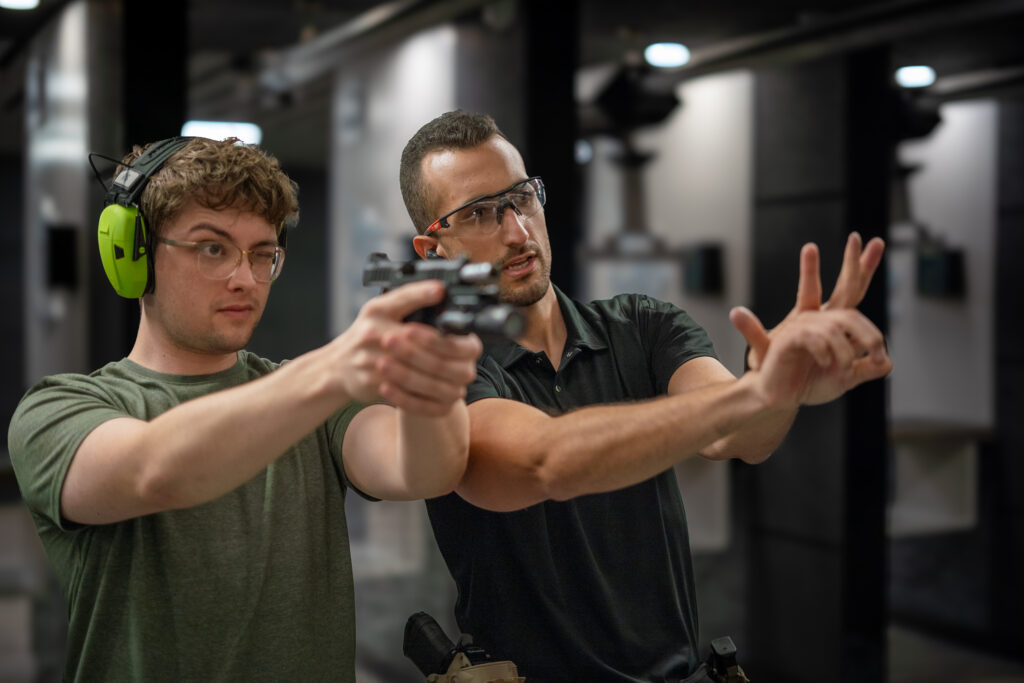
Hajinazarian demonstrates sight alignment to a first-time shooter. Photo: Devin Prince.
Two people can arrive for the same firearms lesson with very different levels of enthusiasm. Ike Hajinazarian of Liberty for All Training describes a small-group dynamic in which one partner is eager and the other is hesitant, sometimes attending because the eager partner persuaded them.
“In a one-on-one lesson, you only have to read one person,” Hajinazarian said.
The couple presents a different demand on his attention. “In that dynamic, my job is to anchor the lesson to the hesitant partner,” he said.
“If you let the enthusiastic partner dominate the conversation or start coaching their spouse on the firing line, the nervous partner shuts down pretty quickly,” he said.
Hajinazarian says he directs his initial questions toward the hesitant participant and adjusts the pace around that person’s comfort. The opening conversation also gives him information he seeks from any student, whether they arrive alone or with someone else.
“Before we start anything, I want to know a bit about the student,” he said. “What’s their life like, what do they do for work, and most importantly, what’s bringing them in today?”
He describes a common opening for every session: a review of firearm safety rules and basic operation before personalized coaching. Within that structure, the student’s reason for attending helps him decide what the individual lesson should address.
Listening continues after the introductions. “I try not to wait until the first session’s over to get feedback,” Hajinazarian said.
He describes asking how an activity felt and which part was hardest, while also watching body language. When he sees frustration, he says more verbal explanation can leave a learner overthinking, prompting him to change his teaching approach.
That attention extends to the time remaining. “With about 15 or 20 minutes left, I’ll always ask what they want to revisit or try before we wrap up,” he said.
That final check gives the learner another opening to name a priority, including something the instructor’s plan might not have covered.
“It’s also really important to me that a student gets what they came for out of the lesson, not just what I planned to teach,” Hajinazarian said.