


Blog
Seattle’s Republican Mayor Wanted a Tighter Gun Law After a Black Panther Visit
A visit to a Seattle school became Mayor Dorm Braman’s reason to seek an emergency weapons measure in September 1968. The Seattle Times linked the proposal to the Black Panthers’ appearance, and Charles Z. Smith’s later oral history identifies Braman as a Republican; the question is how that particular encounter became an argument for broader police authority.
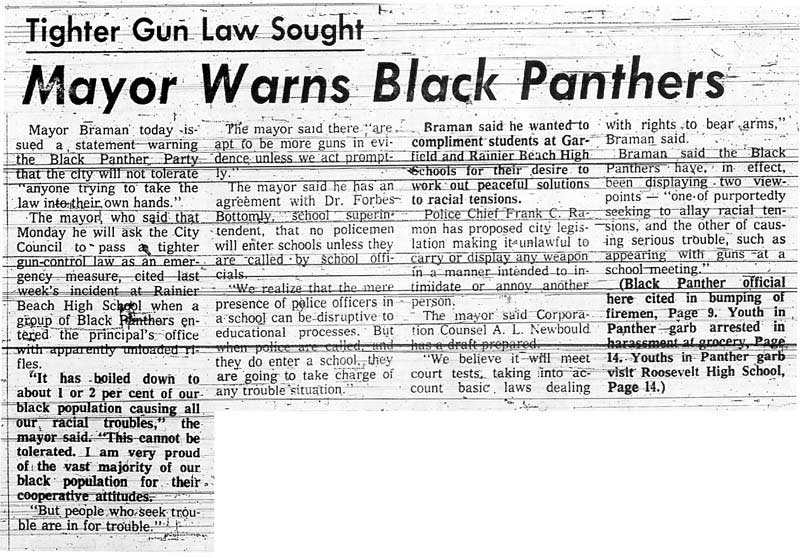
According to the September 14 Post-Intelligencer report, Panthers entered Rainier Beach Junior-Senior High School’s principal’s office carrying rifles described as apparently unloaded. They were not arrested, at school officials’ request, so the report establishes a visible armed visit without establishing a weapons offense.
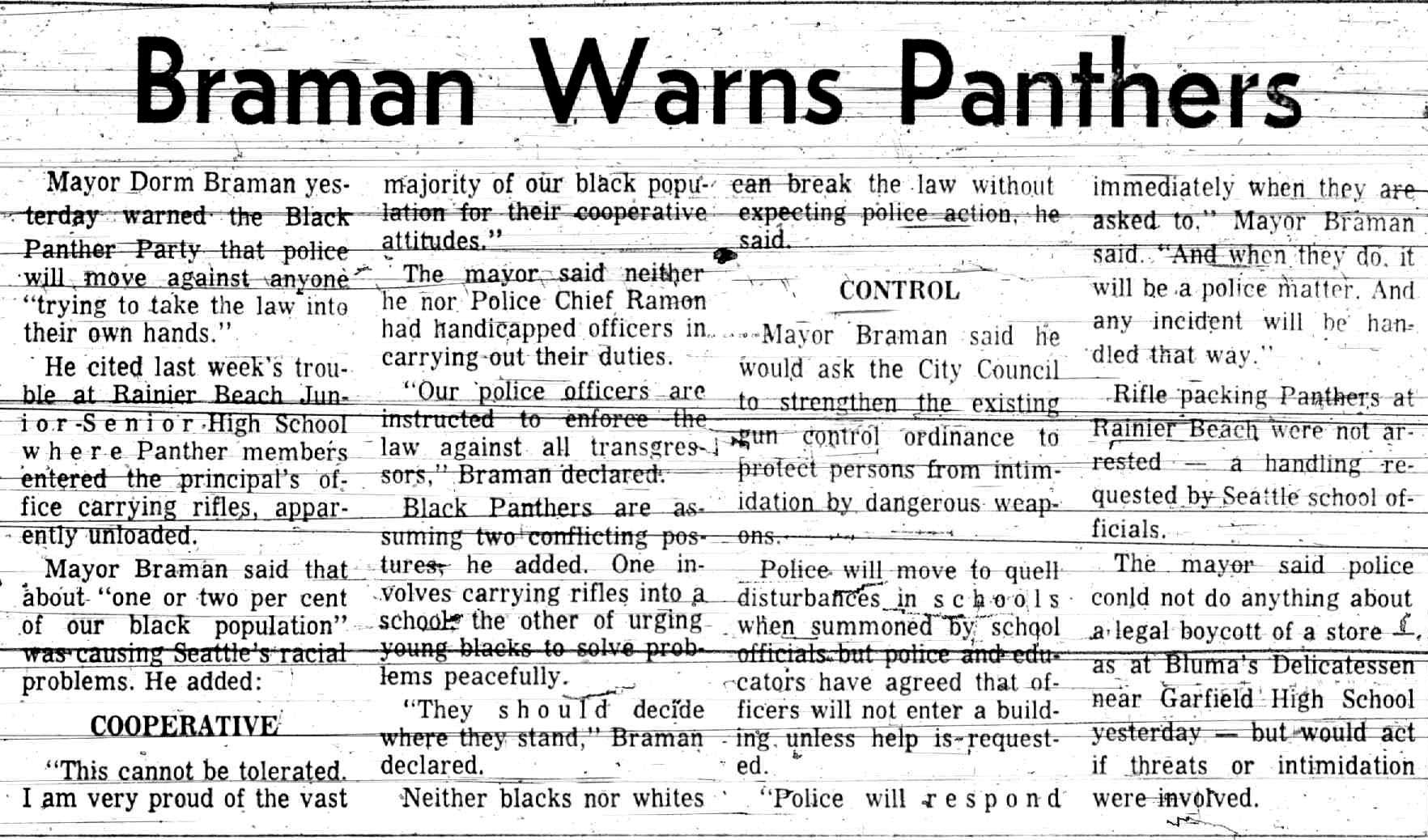
The Times account of the proposed emergency measure described Police Chief Frank C. Ramon’s draft as prohibiting carrying or displaying a weapon with intent to intimidate or annoy someone. Braman said it accommodated the right to bear arms, but the conduct that triggered his request and the conduct the proposed language would prohibit were not automatically the same thing.
The next day’s Post-Intelligencer account of Braman’s remarks recorded him blaming a small portion of Seattle’s Black population for the city’s racial problems while praising the majority for cooperation. He also promised enforcement against Black and white lawbreakers alike, the assurance of equal treatment arrived with a racial explanation for why officials needed more power.
The reporting does not establish the proposal’s eventual passage or final wording, and it supports no claim of a white-only gun exemption. The same Post-Intelligencer report also records Braman acknowledging that a legal store boycott remained beyond police intervention unless threats or intimidation occurred.
Braman could distinguish lawful protest from conduct warranting intervention; his emergency gun-law proposal deserves to be judged with that distinction intact. The criticism is that an armed school visit became evidence for blaming Black political activity more broadly, leaving the people subject to the proposed rule to bear the consequences of that framing.
Illustrative stock photo; not a photograph of the historical events described. Photo by Adolfo Félix on Unsplash- Photo source.