


Blog
The Second Amendment Has a History. It Also Has People in It.
The words “the people” look fairly straightforward until you ask who the government meant by them. In the Second Amendment, ratified in 1791, they appear alongside a well-regulated militia and the security of a free state. The Bill of Rights grew out of demands for protection against government abuse.
For someone religiously opposed to military service, being included could mean being required to do something their conscience would not allow. Madison’s proposed amendments in June 1789 paired the right to arms with an organized militia, and included protection from compulsory service for people with that objection. Congress removed the conscientious-objector language before ratification, so a provision about an actual person’s choice disappeared between the proposal and the amendment.
Congress made the militia obligation concrete in 1792: free, able-bodied white male citizens aged 18 through 44 had to enroll, generally supplying their own arms and equipment. Black people were outside that enrollment category, although the Militia Act does not establish that every Black person was forbidden to own a gun.
After the Civil War, firearm ownership became a question about what freedom would allow formerly enslaved people to do. Southern Black Codes restricted their access to arms, and Congress’s 1866 Freedmen’s Bureau Act expressly protected the constitutional right to bear arms without distinctions of race, color or previous enslavement. The Fourteenth Amendment followed in 1868; when the Supreme Court examined this history in McDonald, it was considering whether protection against government power reached people facing state and local restrictions.
Keeping a handgun at home was the point of Dick Heller’s challenge to D.C. law. As the Court’s account explains, he was a D.C. special police officer allowed to carry a handgun on duty, but the District refused to register one he wanted to keep at home. Heller’s 2008 decision recognized an individual right to possess a firearm for lawful purposes, including home self-defense, independent of militia service, while also acknowledging limits on that right.
Chicago argued that this protection did not apply to the states, while Otis McDonald and three other residents were prevented by the city’s laws from keeping handguns at home for self-defense. The Supreme Court rejected the city’s position in McDonald in 2010, applying Heller’s protection to state and local governments through the Fourteenth Amendment. The amendment adopted after emancipation now supplied a way for those residents to challenge what their city would let them keep in their own homes.
Beyond the home, New York denied Robert Nash an unrestricted carry license when he wanted to carry for general self-defense: the state required a special need. Bruen ended that discretionary requirement in 2022, while distinguishing ordinary licensing systems using objective criteria. The decision also changed what government would have to show when defending a restriction on conduct covered by the amendment: consistency with the country’s historical tradition of firearm regulation.
When Rahimi invoked the Second Amendment, a court had already found that he posed a credible threat to his former partner’s physical safety. In United States v. Rahimi in 2024, the Supreme Court upheld temporary disarmament under a domestic-violence restraining order issued after notice and an opportunity to be heard, without demanding an identical eighteenth-century law. I think her request for protection belongs in a history of gun rights, too.
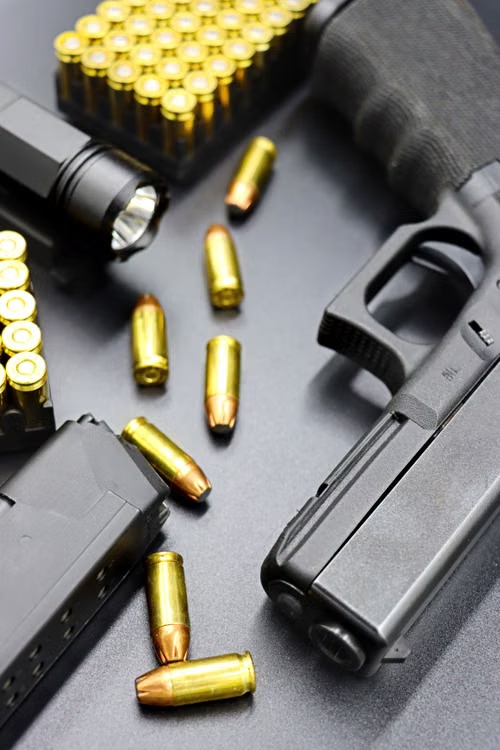
Illustrative stock photo; not a photograph of the historical events described. Photo by Marta Branco on Pexels — Photo source.